



Eastern Mallard Ph.D. Project
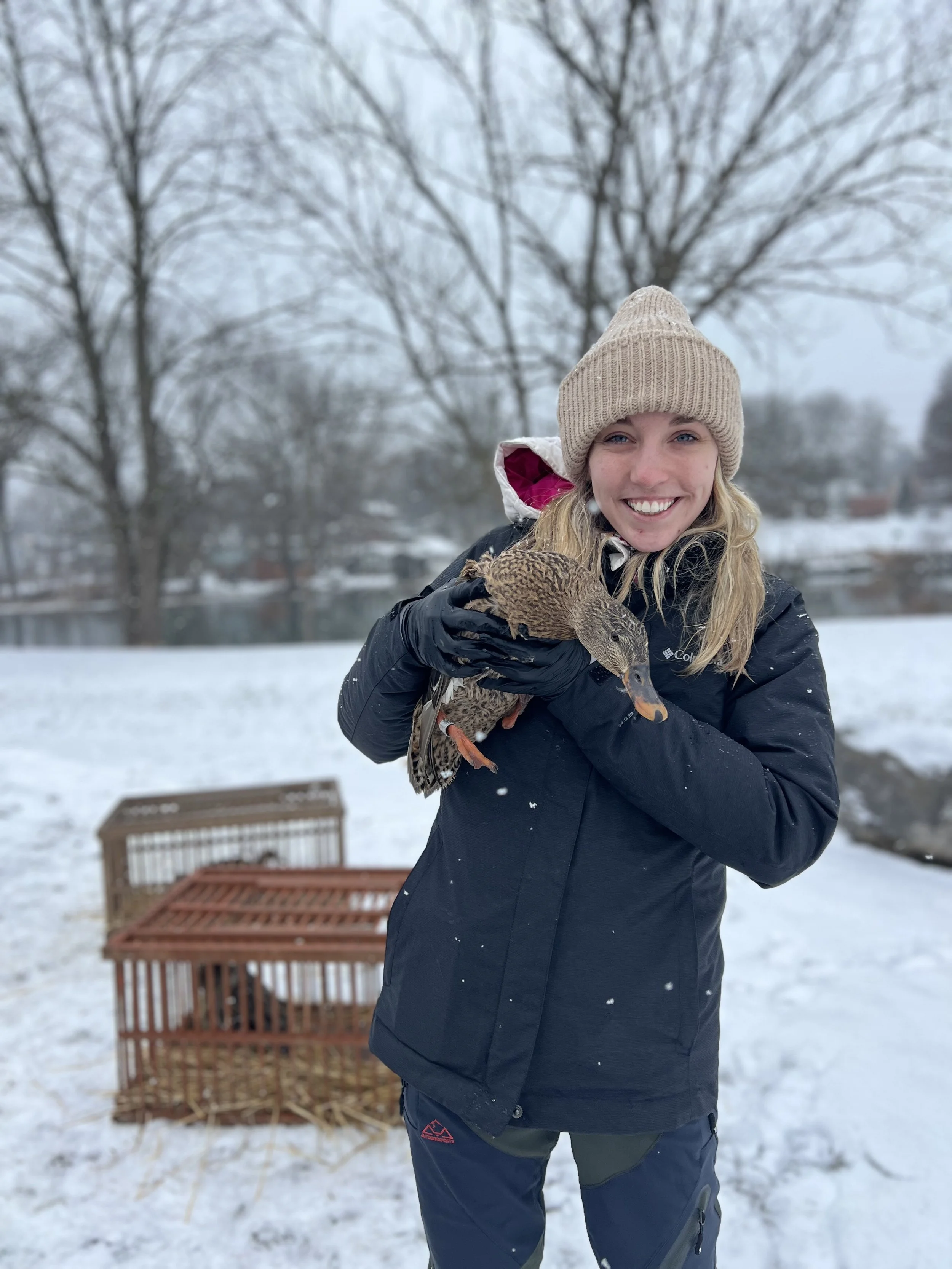
I started my PhD under the supervision of Dr. Mitch Weegman in August of 2023 and expect to finish my four chapter dissertation by December of 2027. I currently study the eastern mallards, mallards on the east coast of North America. Based on survey data taken from Canada and the US, it’s been known that this population of mallards is declining. Evenmoreso, the mallards in the US northeast have been declining radpidly, over 39% in the past 25 years. The mallards in eastern Canada (and Maine) have been increasing during that same time period. Why the difference? That’s where I come in.
To best discover why the population is decreasing so much, it’s my job to compare these two populations to each other and do some detective work. Current hypotheses suggest that there’s a big difference in habitat use and availability, since that hasn’t been studied large scale throughout the Atlantic Flyaway. This population has to be managed due to the important of these ducks as game for hunters (it’s one of the most popular ducks for hunting in the Atlantic Flyway). Currently, bag limits are being imposed on this species due to the decline in population. The goal of this project is to identify differences in the population (whether that be habitat, reproductive success, you name it) to inform management to best protect this population.
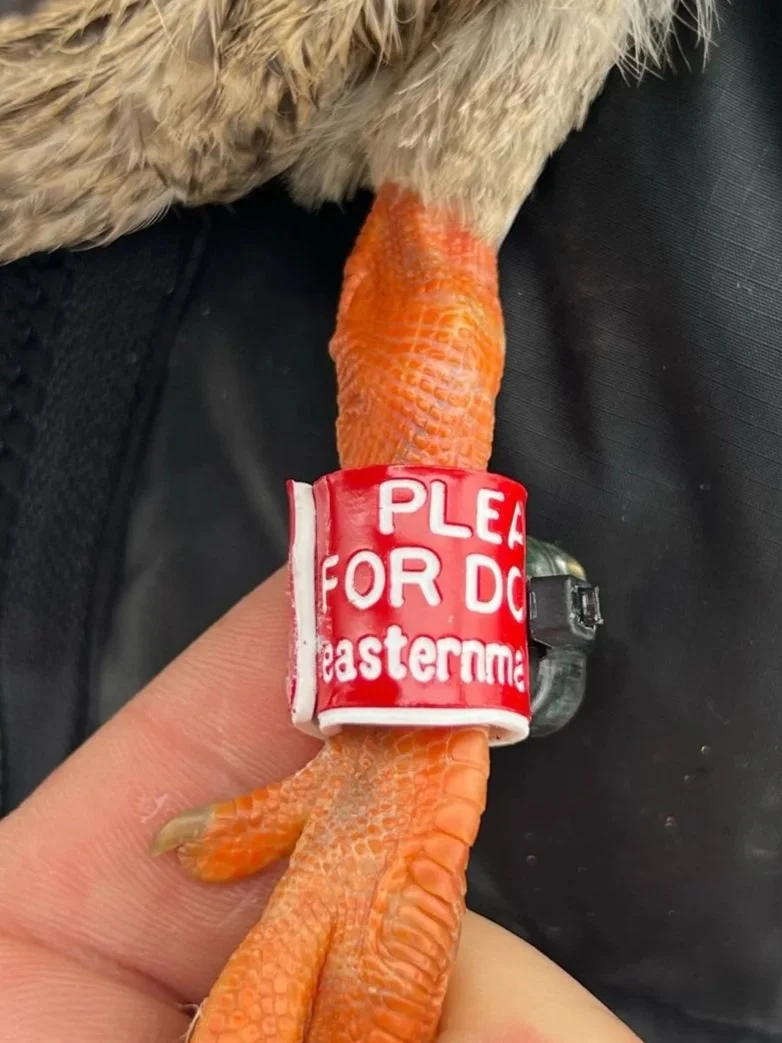
More than 1300 GPS/ACC transmitters have been attached to female mallards (called hens) to track their breeding locations and develop machine learning techniques to quantify reproductive success. It’s a huge data project, combining multiple models to determine what the problem is within this system. As well as transmitters, I have also deployed over 1200 geolocators (red bands in the photo below) to measure light levels. With that data, we can actually deduce lat and long, and also see when those mallards are incubating (when mallards incubate, their legs are tucked under their body so the light = 0!).
You can follow the movements of my mallards via this website.
Here’s a simple abstract of my current research to date:
Population change can be driven by one or multiple demographic mechanisms, such as reproductive rate and survival probability during the breeding period. Yet, it is becoming more evident that these mechanisms can be influenced by outside factors that occur throughout the annual cycle of a bird’s life. Investigating these outside factors, such as carry-over effects or environmental conditions, can be done using full annual cycle (FAC) models. With these, we can look at the impact bird movement, proportion of time feeding, and weather conditions have on reproductive success in all three periods of a bird’s breeding season – early incubation, full-term incubation, and brood rearing. Furthermore, these models can help inform conservation plans for populations and species of concern, such as the eastern mallard (Anas platyrhynchos). To do this, I will be deploying ~1100 Global Positioning System-acceleration (GPS-ACC) tracking devices to study the breeding period and population differences among the two subpopulations of eastern mallards. The Canada and Maine population is growing, whereas the northeastern US population is declining. Measuring reproductive success throughout the breeding period by integrating pre-breeding season information, using high-resolution GPS and ACC data will help us gain a better perspective of demographic rates that are inestimable with current age-ratio data, focusing conservation attention to slow or reverse the declining northeastern US subpopulation of eastern mallards.
And lastly, my work could not be done without my amazing collaborators throughout the field. They spend countless hours throughout the winter, scouting sites, baiting traps, and trapping ducks.
University of Saskatchewan
Fall 2023-Dec 2027
Mentor: Dr. Mitch Weegman
birds are banded under approved permits
Funded by:
PA Game Commission
NY Department of Environmental Conservation
Ducks Unlimited Inc.
Awards recieved:
CGPS 75th Recruitment Scholarship, University of Saskatchewan
Edward D. and Sally M. Futch Graduate Fellowship, Ducks Unlimited
